 Image 1 of 1
Paper: Arches 140 lb hot press block paper – Painting size 11 x 14 inches with matte to fit 16 x 20 frame.
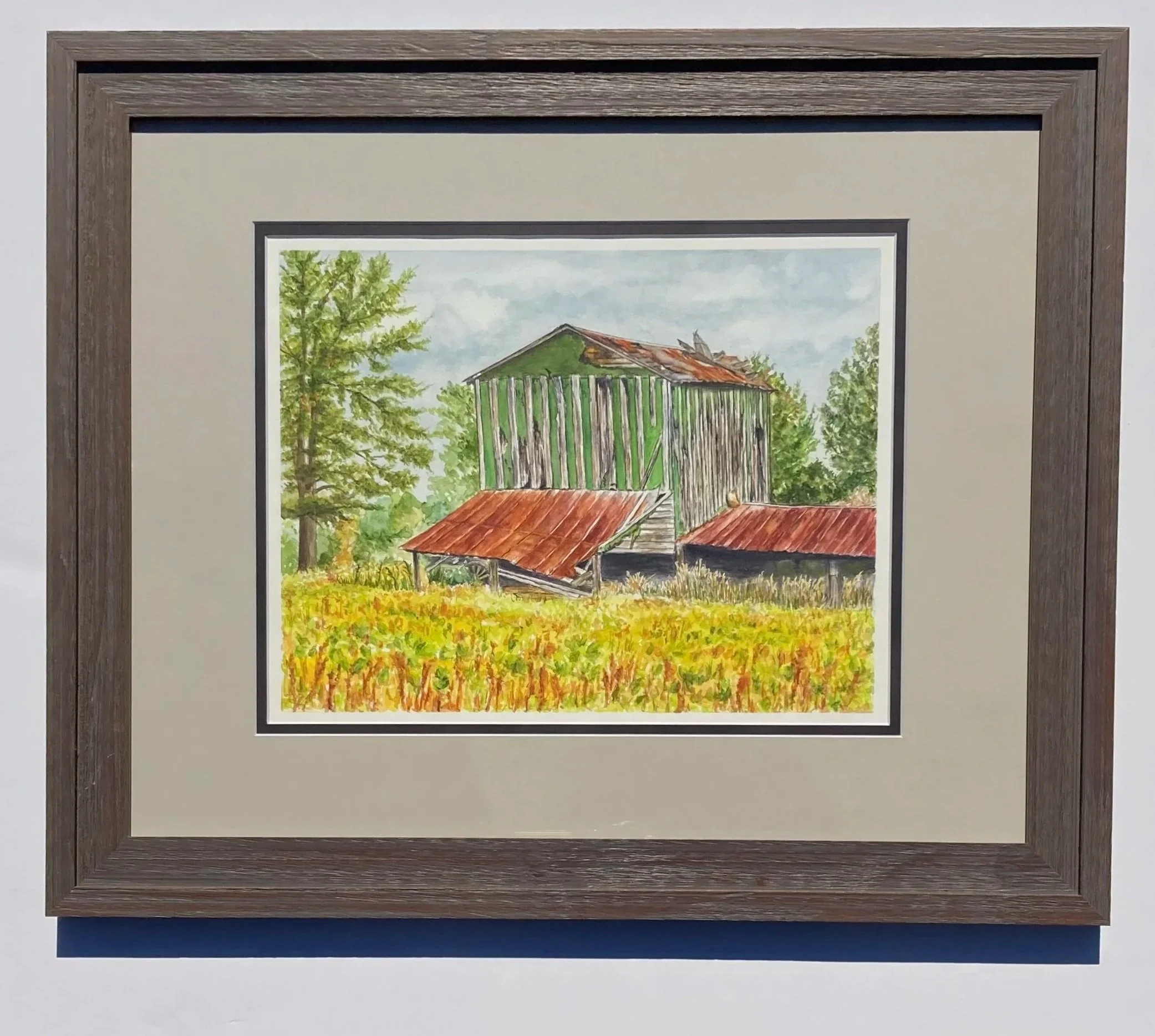
Years ago, on the road to Greenville from Williamston, I stopped the car to capture a bucolic North Carolina scene. This was my first photograph of a tobacco barn, although at the time, I was a relative newcomer to this state, so the tobacco barn was simply called “the green shed” in my photo file. The contrast of colors caught my attention on this country backroad as the warm autumn sun highlighted the changing leaf colors of the almost ready-for-harvest soybeans. The rust-colored sorrel seemed randomly mixed throughout the field of golden yellow and shamrock green soybeans. A light breeze occasionally swayed the tender stalks. Refreshing, as I stood on the gravel road shoulder with my camera in hand. Inspiring, as well. I could not stop thinking about the generations of farming families that worked this land. Was this a Century Farm or perhaps, it was a land purchase that was simply now a rental field?
In some ways, it is good that tobacco is no longer a high commodity item. What remains of many of these leaf curing sheds is from a forgotten time when farming was as much of an art as was the structure of these ubiquitous barns. The style of the tobacco barn built was regionally different depending on the type of tobacco being cured, and the cultural preferences. In North Carolina, most tobacco barns seem to be tall and narrow fitting the function for flue-curing of the tobacco leaf where the leaf was dried slowly with smoke from an outside fire. The warm smoky air was distributed throughout the barn generally through ductwork on the floor with the inside temperature regulated by manually opening and closing shutters on the barn sides or roof. This design worked well back in the day to return moisture from the tobacco leaf to the atmosphere in a fairly short period of time.
You just have to love them, though… these old tobacco sheds. Some now sport graffiti or old gas station porcelain-on-metal advertising signs, some stand stately with weathered boards intact in fields of other crops. Occasionally, you may find a tobacco shed still flashing bright paint as an invitation to step back to a time when the chores of the day were much more relaxed and the rewards of a simple farming life were enough. I wanted to find this feeling in my photograph and also in my painting.
"You have succeeded in life when all you really want is only what you really need." - Vernon Howard
Paper: Arches 140 lb hot press block paper – Painting size 11 x 14 inches with matte to fit 16 x 20 frame.
Years ago, on the road to Greenville from Williamston, I stopped the car to capture a bucolic North Carolina scene. This was my first photograph of a tobacco barn, although at the time, I was a relative newcomer to this state, so the tobacco barn was simply called “the green shed” in my photo file. The contrast of colors caught my attention on this country backroad as the warm autumn sun highlighted the changing leaf colors of the almost ready-for-harvest soybeans. The rust-colored sorrel seemed randomly mixed throughout the field of golden yellow and shamrock green soybeans. A light breeze occasionally swayed the tender stalks. Refreshing, as I stood on the gravel road shoulder with my camera in hand. Inspiring, as well. I could not stop thinking about the generations of farming families that worked this land. Was this a Century Farm or perhaps, it was a land purchase that was simply now a rental field?
In some ways, it is good that tobacco is no longer a high commodity item. What remains of many of these leaf curing sheds is from a forgotten time when farming was as much of an art as was the structure of these ubiquitous barns. The style of the tobacco barn built was regionally different depending on the type of tobacco being cured, and the cultural preferences. In North Carolina, most tobacco barns seem to be tall and narrow fitting the function for flue-curing of the tobacco leaf where the leaf was dried slowly with smoke from an outside fire. The warm smoky air was distributed throughout the barn generally through ductwork on the floor with the inside temperature regulated by manually opening and closing shutters on the barn sides or roof. This design worked well back in the day to return moisture from the tobacco leaf to the atmosphere in a fairly short period of time.
You just have to love them, though… these old tobacco sheds. Some now sport graffiti or old gas station porcelain-on-metal advertising signs, some stand stately with weathered boards intact in fields of other crops. Occasionally, you may find a tobacco shed still flashing bright paint as an invitation to step back to a time when the chores of the day were much more relaxed and the rewards of a simple farming life were enough. I wanted to find this feeling in my photograph and also in my painting.
"You have succeeded in life when all you really want is only what you really need." - Vernon Howard